







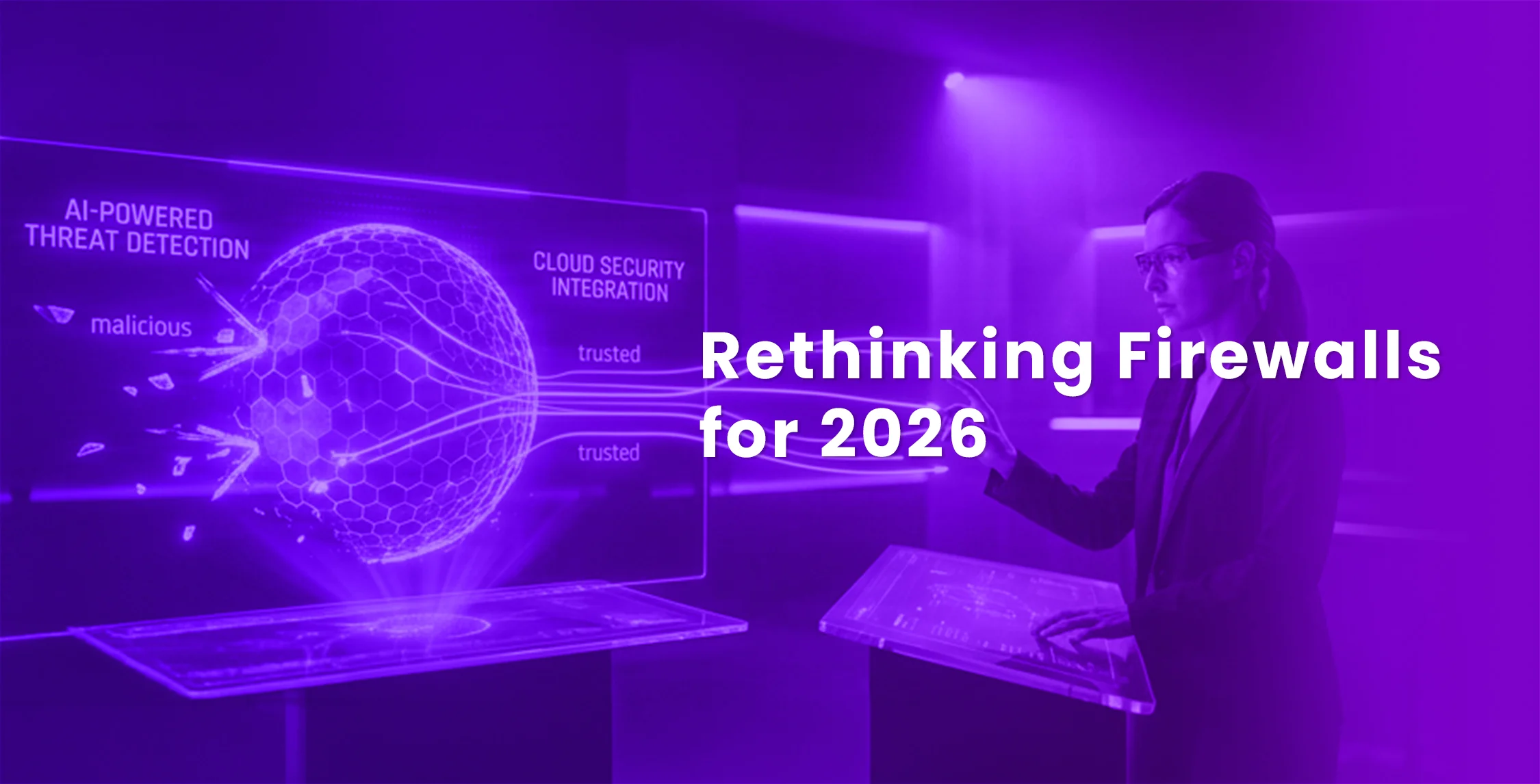
Firewalls were once the heroes of enterprise security.
They stood at the edge, defined the perimeter, and asked a simple question:
“Are you allowed in or not?”
But in 2026… that question is harder to answer—because the “edge” is everywhere.
The Enterprise Has Changed (Have Your Firewalls?)
Quick reality check:
Today’s enterprise looks like this:
- Users working from anywhere
- Applications spread across multiple clouds
- Data flowing continuously through SaaS platforms
So, the real question is:
What exactly is the perimeter now?
Traffic Doesn’t Follow the Old Rules Anymore
Traditional firewalls were built for predictable traffic paths.
Modern traffic has other plans:
- Goes directly to cloud apps
- Moves across distributed environments
- Arrives fully encrypted
So instead of a clear highway through a checkpoint, we now have thousands of invisible lanes.
Let’s Talk About Threats (They’ve Upgraded Too)
Old model:
“If I know it, I block it.”
2026 model:
- AI-generated attacks
- Constantly changing behaviour
- Highly targeted and personalized
It’s no longer a static opponent; It’s an adaptive one.
Quick Question: Who Do You Trust?
Firewalls used to answer this based on:
- IP address
- Network location
- Rules and policies
Today, trust is decided by:
- Identity
- Device posture
- Real-time risk
Different inputs. Completely different logic.
So Where Is the Industry Heading?
Enterprises are clearly moving in one direction:
✔ Zero Trust everywhere
✔ SASE for secure access
✔ SSE for cloud-delivered security
✔ AI-driven prevention and response
Not isolated tools. Not static controls. But continuous, intelligent security.
Firewalls are not disappearing.
But they are no longer the main character. Because in a cloud-first, AI-driven world, security is no longer about guarding a boundary.
It’s about securing every connection, every identity, every moment—continuously.