







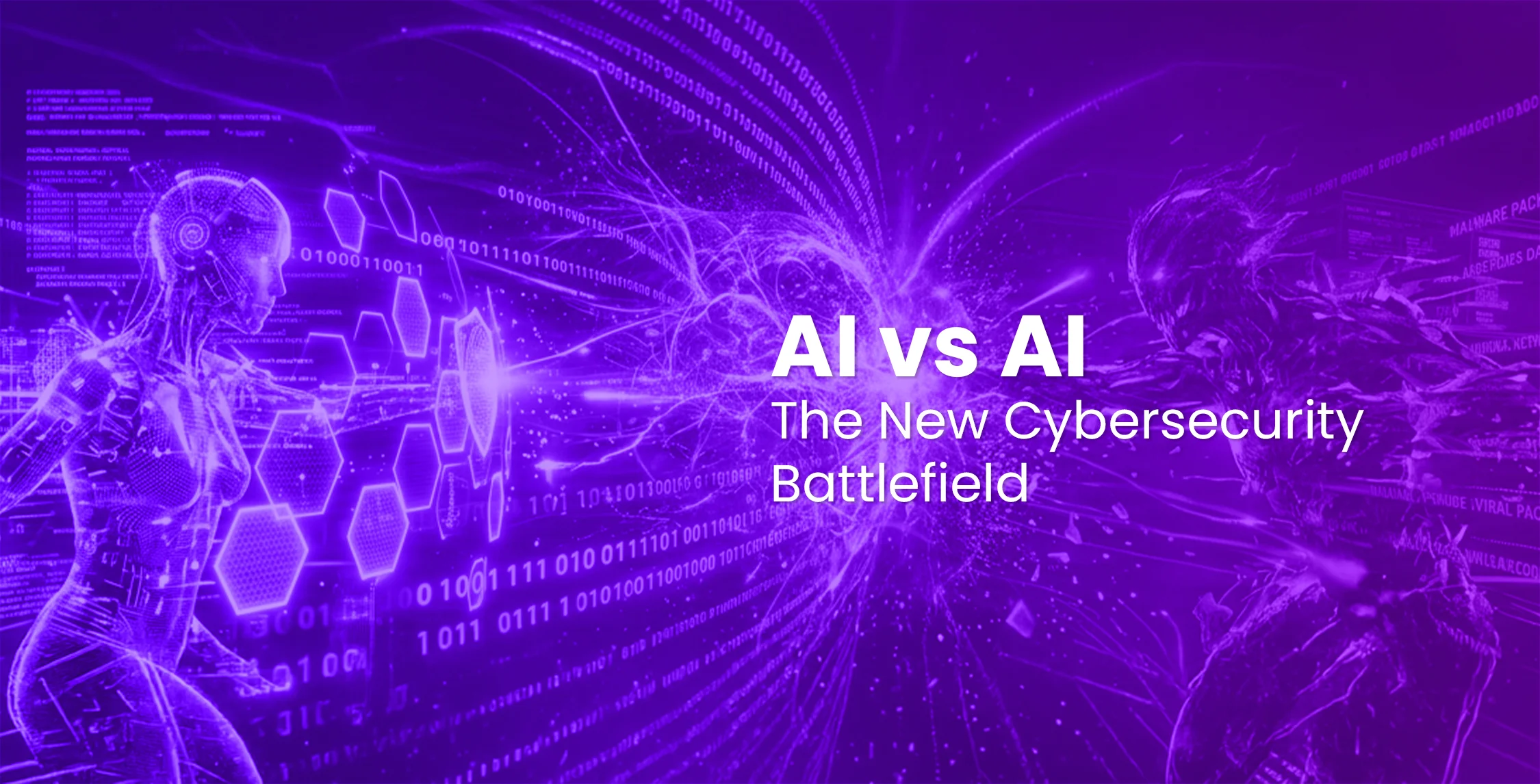
Enterprise cybersecurity is no longer a game of tools and tactics, it’s a race of intelligence.
In 2026, artificial intelligence isn’t just strengthening defences. It’s also powering the most sophisticated cyberattacks we’ve ever seen. What used to take weeks of planning and manual execution can now be launched in minutes, with precision, scale, and adaptability.
Welcome to the era of AI vs AI.
Attackers are no longer relying on traditional methods. AI is enabling them to:
- Automate reconnaissance and vulnerability discovery
- Generate highly convincing phishing campaigns at scale
- Adapt attacks in real time to bypass security controls
- Exploit systems faster than human teams can respond
These attacks are not just faster—they’re smarter. They learn, evolve, and optimize with every attempt.
The result? A threat landscape where static defences simply can’t keep up.
Why Traditional Security Models Are Falling Short
Legacy security frameworks were built for predictable threats.
AI-driven attacks are anything but predictable.
Rule-based systems, signature detection, and manual response models are increasingly ineffective against:
- Polymorphic malware that constantly changes its signature
- AI-generated social engineering that mimics human behaviour
- Autonomous attack chains that require no human intervention
In this environment, reacting after an alert is already too late.
Fighting AI with AI
To counter this shift, enterprises are turning to AI-driven security models that can:
- Detect anomalies in real time across massive datasets
- Predict potential threats before they materialize
- Automate response and containment actions instantly
- Continuously learn and improve from new attack patterns
This is not just automation—it’s adaptive defence.
AI-powered security platforms act as force multipliers, enabling security teams to respond at machine speed without increasing headcount.
The Human + AI Advantage
Despite the rise of AI, human expertise remains critical.
The most effective security strategies in 2026 combine:
- AI for speed, scale, and pattern recognition
- Human intelligence for context, judgment, and strategy
It’s not about replacing people—it’s about augmenting them.
Organizations that strike this balance are the ones building true cyber resilience.
What Enterprises Need to Do Now
To stay ahead in this AI-driven battlefield, organizations must:
- Shift from reactive to predictive security models
- Invest in AI-native security platforms
- Secure not just networks, but identities and data flows
- Build integrated, platform-based security architectures
- Continuously train teams to work alongside AI systems
The question is no longer whether AI will transform cybersecurity. It already has.
The real question is:
Is your organization using AI fast enough to defend against it?
Because in 2026, the winners won’t be the ones with more tools,
they’ll be the ones with smarter ones.